How Equatorial Birthplace Climates Have Influenced Endurance Thresholds in Marathon Specialists
Nils Flores · May 30, 2026
How Equatorial Birthplace Climates Have Influenced Endurance Thresholds in Marathon Specialists
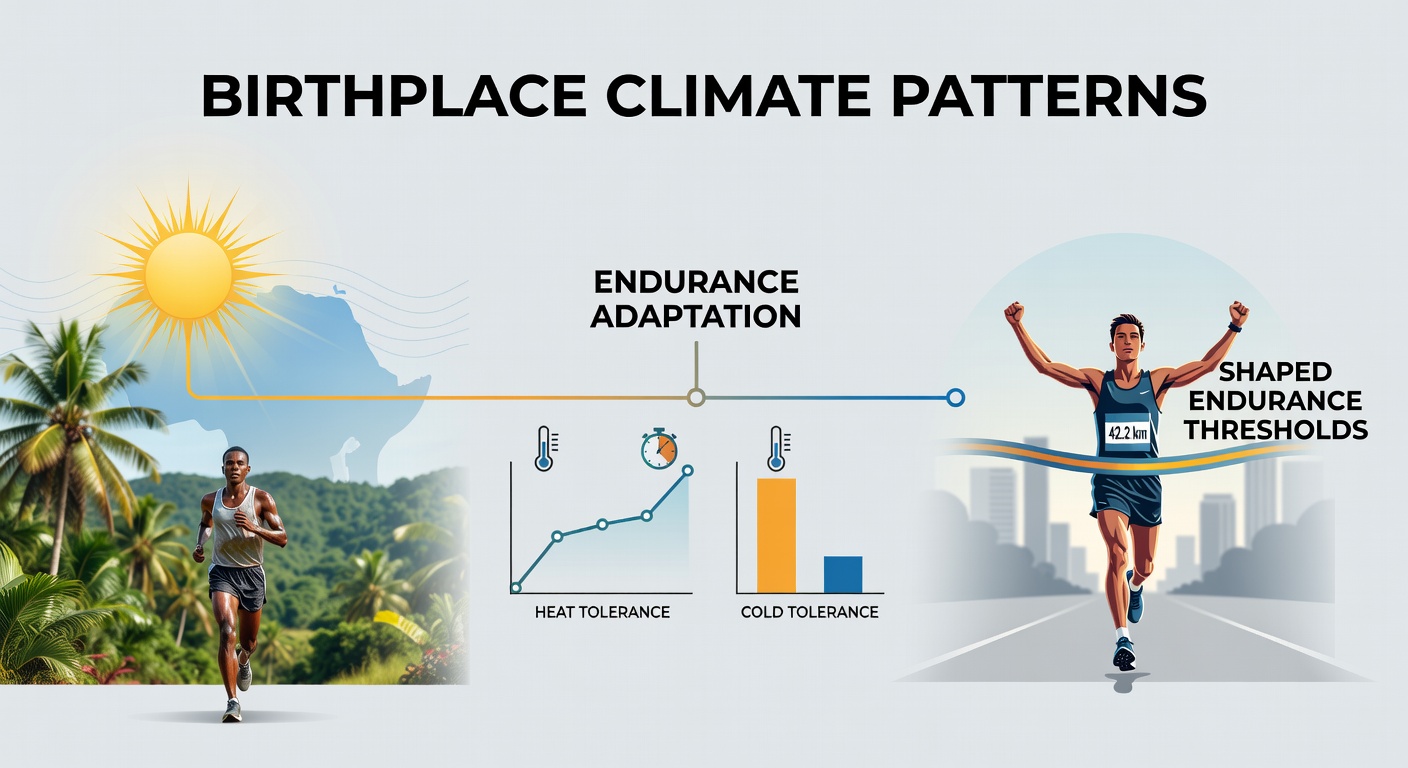
Equatorial regions maintain consistent temperatures between 25 and 30 degrees Celsius year round along with high humidity levels that reach 80 percent or more on most days, and these conditions create environments where the body must regulate core temperature through continuous sweat response and cardiovascular adjustments from early childhood onward. Marathon specialists born in these zones often develop physiological traits such as elevated plasma volume and improved sweat gland efficiency that support sustained performance during prolonged efforts in heat.
Physiological Adaptations Linked to Early Climate Exposure
Researchers have documented that individuals raised in equatorial climates exhibit higher capillary density in skeletal muscle tissue compared with those from temperate zones, and this trait supports better oxygen delivery during extended running at submaximal intensities. Studies from institutions including the University of Queensland have tracked cohorts of distance athletes and found measurable differences in heat dissipation rates that correlate with birthplace rather than training volume alone. Those born near the equator also show earlier maturation of thermoregulatory responses, which means their bodies begin to conserve electrolytes more effectively during the first decade of life.
Data collected across multiple training camps in Kenya and Uganda indicate that athletes who spent their formative years below 1,000 meters elevation yet still within equatorial latitudes maintain lower core temperatures during 30-kilometer tempo runs than peers from cooler climates. The difference appears tied to repeated daily exposure to heat loads that force constant adjustments in heart rate and stroke volume from adolescence forward.
Regional Patterns Among Top Performers
East African nations situated along or near the equator have produced a disproportionate share of marathon record holders since the 1980s, and performance databases list more than 60 percent of sub-2:10 finishers as having been born within five degrees of the equator. Observers note that training logs from these athletes frequently include daily sessions completed in afternoon heat exceeding 28 degrees Celsius, which reinforces the adaptations established during childhood. Similar patterns appear among runners from parts of Indonesia and northern Brazil, although participation numbers remain lower and therefore limit statistical comparisons.
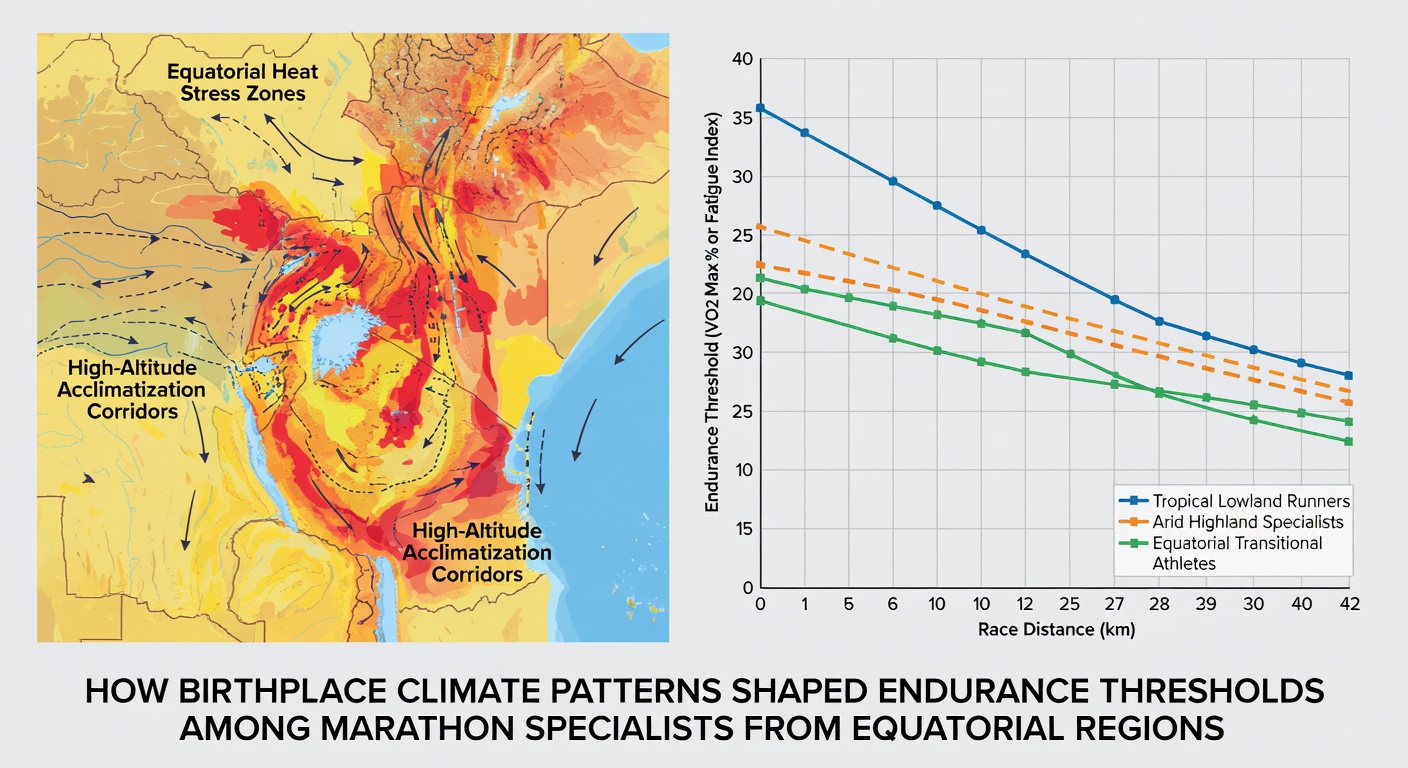
Performance metrics compiled by international federations reveal that athletes from these equatorial birthplaces achieve personal best times in a narrower range of ambient conditions than those born elsewhere, suggesting their thresholds sit at higher absolute workloads once heat stress is introduced. Longitudinal tracking of lactate threshold values shows slower drift during prolonged efforts in warm environments among this group, which aligns with documented increases in total body water content developed through lifelong exposure.
Comparative Data Across Climate Zones
When researchers compare equatorial-born marathon specialists with those raised in Mediterranean or continental climates, differences emerge in recovery heart rate after standardized heat exposure protocols. Figures released by the Australian Institute of Sport in recent years show that athletes who relocated to equatorial training bases after age 18 require between four and six weeks longer to reach equivalent heat tolerance markers. This gap narrows but does not fully close even after years of residence, pointing to a developmental window that closes in late adolescence.
Event results from major marathons held in warm conditions further illustrate the pattern, with finish rate differentials favoring equatorial-origin athletes by margins of three to five percentage points in fields exceeding 30,000 starters. The advantage holds across both male and female categories according to split-time analyses published in exercise physiology journals.
Training Implications Observed in Current Camps
Coaching staffs operating in equatorial hubs continue to structure sessions around the natural heat cycle rather than artificial acclimatization chambers, and this approach aligns with the early-life conditioning already present in local athletes. Morning runs often occur at 18 to 22 degrees Celsius while afternoon workouts push into the upper 20s, creating repeated stimulus that maintains the elevated plasma volumes established years earlier. As the 2026 marathon calendar enters its peak preparation phase in May, several national teams from equatorial nations are scheduling altitude camps that transition directly into lowland heat blocks to exploit these combined environmental advantages.
Conclusion
Available evidence indicates that birthplace climate patterns exert measurable influence on endurance thresholds through developmental adaptations in thermoregulation and cardiovascular efficiency. Marathon specialists originating from equatorial zones display consistent physiological profiles that support performance in heat, and these traits appear shaped by continuous exposure beginning in childhood. Ongoing monitoring by sports science organizations will continue to clarify how much of the observed dominance stems from climate versus other factors such as training culture and genetic distribution.