How Fabric Technology Advancements Have Influenced Drag Reduction and Speed Records Among Competitive Swimmers in Olympic Pools
Devon Carter · Aug 1, 2026
How Fabric Technology Advancements Have Influenced Drag Reduction and Speed Records Among Competitive Swimmers in Olympic Pools
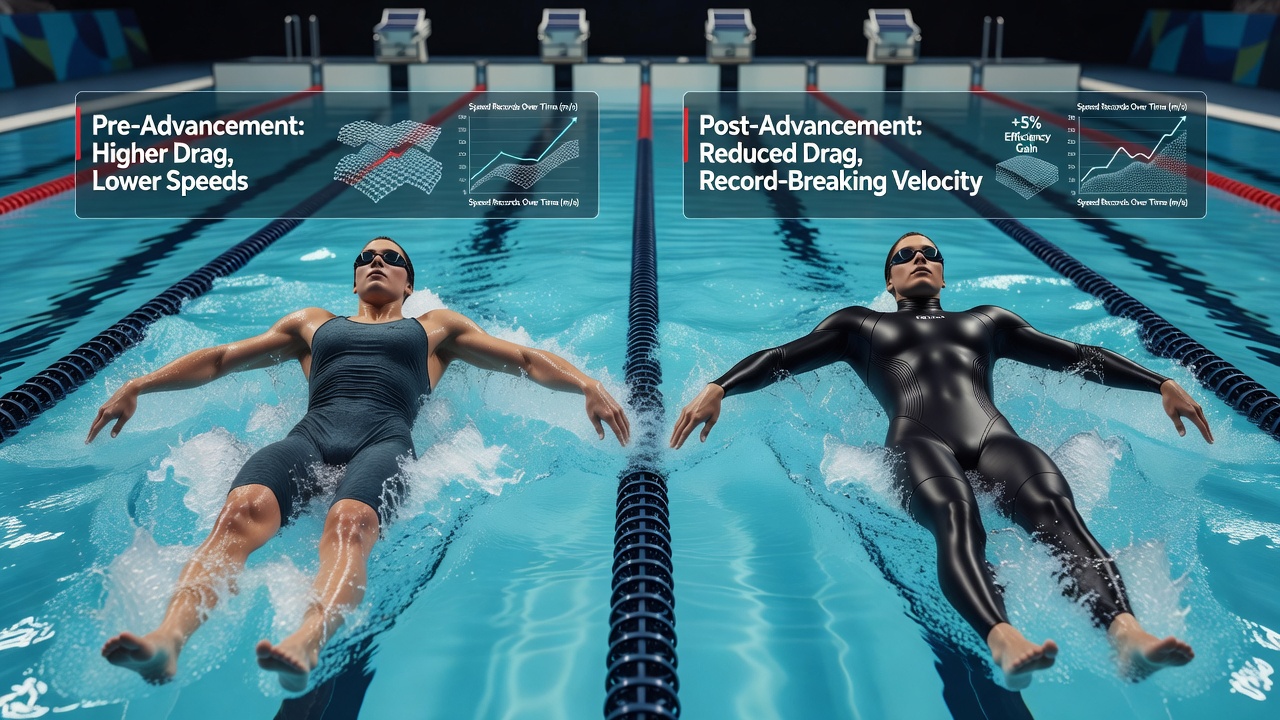
Swimwear manufacturers began experimenting with synthetic materials in the 1990s, and those early efforts focused on reducing water resistance through tighter weaves and smoother surfaces that allowed athletes to move through pools with less friction. Researchers at institutions in Australia documented how nylon and polyester blends cut drag coefficients by measurable margins compared to traditional cotton suits, while data from the early 2000s showed incremental gains in elite times that correlated with these material shifts.
Polyurethane panels entered the picture around 2008, and suits incorporating this technology covered larger body surfaces with bonded seams that eliminated stitching bumps known to create turbulence. The Speedo LZR Racer, introduced that year, featured ultrasonic welding and a combination of elastane and polyurethane layers designed to compress muscles and maintain body position, and athletes wearing these garments set 23 world records during the Beijing Games alone according to World Aquatics historical records. Observers noted that the suits reduced passive drag by up to 4 percent in wind tunnel tests conducted by manufacturers, though independent verification came later from university labs in the United States and Europe.
Regulatory Responses and Material Restrictions
World Aquatics, formerly known as FINA and headquartered in Switzerland, responded to the surge in records by implementing new rules effective January 2010 that banned full-body non-textile suits and required all fabrics to be permeable with a maximum thickness limit. These changes forced companies to pivot back to woven textiles while still pursuing drag reduction through advanced weaving techniques and hydrophobic coatings that repel water rather than absorb it. Studies from Canadian research centers later confirmed that certain three-dimensional knit structures maintained compression benefits without violating permeability standards, and records continued to fall at a steadier pace through the 2012 London and 2016 Rio Olympics.
By the Tokyo 2020 cycle, manufacturers had refined bonded seam placements and incorporated recycled nylon fibers treated with plasma coatings, and these updates produced measurable reductions in surface friction according to tests published by the University of Southampton in the United Kingdom. Data from that period shows that elite 100-meter freestyle times improved by fractions of a second on average, with analysts attributing part of the progress to fabric properties that stabilized body alignment during underwater dolphin kicks.
Current Developments in Hydrodynamic Textiles
Contemporary suits use multi-layer weaves with varying densities across different body zones, and these targeted constructions channel water flow along the torso and limbs while providing support where muscle oscillation creates the most drag. Japanese textile firms and European engineering teams have collaborated on fabrics tested in flume facilities, and results indicate that certain microfiber patterns reduce the boundary layer thickness by directing micro-vortices away from the swimmer. Records set at the 2024 Paris Games reflected these incremental advances, with several events seeing new marks that aligned with the adoption of updated models approved under current World Aquatics guidelines.

Preparation for future competitions includes ongoing work on adaptive materials that respond to water temperature, and preliminary reports from Australian laboratories suggest these could further minimize energy loss during races. The emphasis remains on compliance with thickness and coverage rules that prevent any return to the extreme coverage seen before 2010.
Impact on Training and Technique Integration
Coaches now incorporate fabric testing into equipment selection, and many programs use portable sensors to compare drag across different suit models during pool sessions. This data-driven approach pairs with stroke analysis to maximize the benefits of reduced resistance, while swimmers report that the compression from modern textiles helps maintain core stability without restricting shoulder rotation. Longitudinal studies tracking national team performances across multiple Olympic cycles reveal consistent correlations between suit technology upgrades and improved split times in the latter stages of races, when fatigue typically increases form breakdown.
Facilities in multiple countries have invested in specialized testing tanks that simulate race conditions, and engineers use particle image velocimetry to visualize water flow around fabric samples stretched over mannequins. These methods have guided refinements in seam orientation and panel placement that continue to shave milliseconds from elite performances under the current regulatory framework.
Conclusion
Fabric technology has moved through distinct phases since the late 20th century, each stage producing measurable effects on drag and the rate at which speed records advance in Olympic swimming. Regulatory limits established in 2010 redirected innovation toward textile-based solutions that still deliver performance gains, and ongoing research at international institutions supports continued refinement within those boundaries. As competitions approach future cycles, the integration of hydrodynamic data with approved materials remains central to how records evolve in the sport.