How Timezone Adjustments Have Influenced Reaction Times for Athletes Competing in Transcontinental Tournaments
Paul Weber · Jul 16, 2026
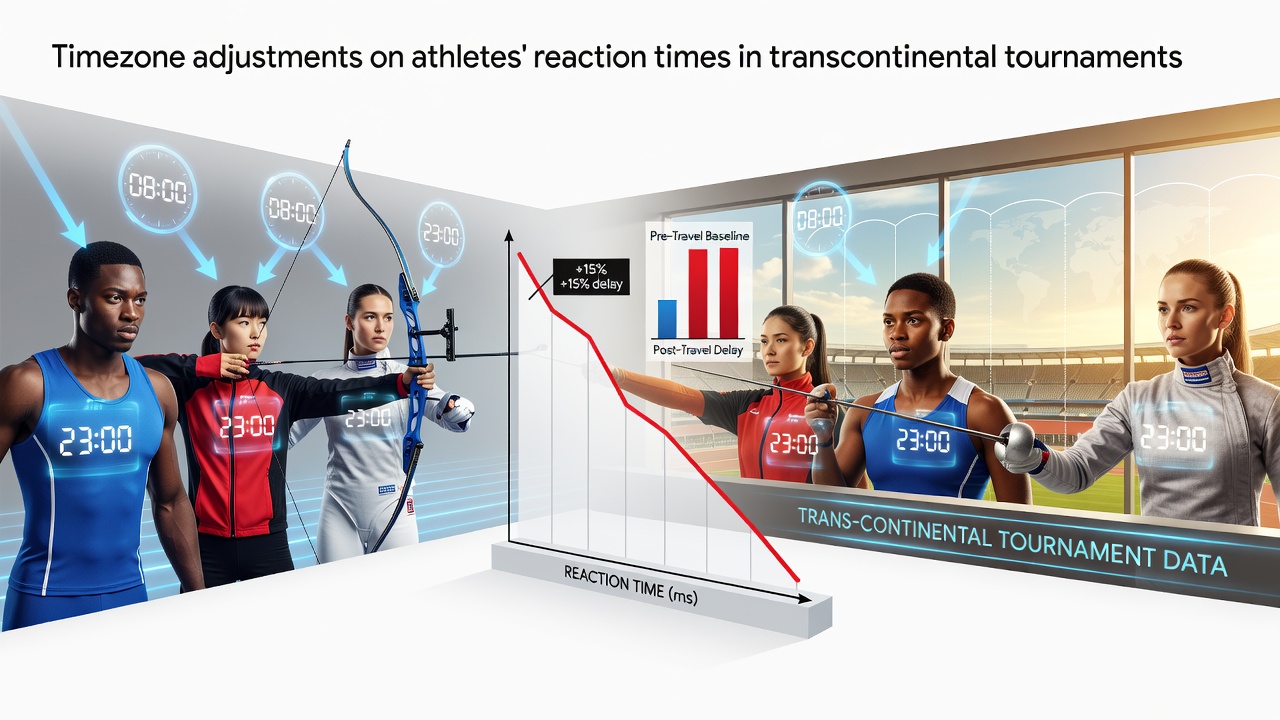
How Timezone Adjustments Have Influenced Reaction Times for Athletes Competing in Transcontinental Tournaments
Transcontinental tournaments force athletes to cross multiple time zones in short periods, and researchers have documented measurable impacts on reaction times as circadian rhythms struggle to realign with new schedules. Data from professional leagues shows that players traveling eastward often experience delays in visual processing and motor responses, while westward shifts produce different patterns of recovery that can stretch across several days.
Circadian Disruption During Extended Travel
Studies tracking athletes in events such as the NBA playoffs and European Champions League knockout stages reveal that crossing five or more time zones correlates with reaction time increases of 30 to 80 milliseconds in the first 48 hours after arrival. These figures come from controlled testing protocols that measure simple and choice reaction tasks before and after flights, and they align with broader findings on melatonin suppression and core body temperature shifts documented by institutions including the Australian Institute of Sport. Teams that schedule arrival windows three to four days ahead of competition see partial mitigation, yet full synchronization rarely occurs before the opening match.
What's interesting is how the direction of travel matters. Eastward journeys compress the internal clock and tend to produce greater deficits in sustained attention tasks, whereas westward travel allows a longer adaptation window that sometimes preserves baseline reaction metrics more effectively. Observers note that athletes from North American teams competing in Asian tournaments frequently report these directional differences in post-flight assessments conducted by team medical staff.
Performance Data from Recent International Competitions
Analysis of tennis Grand Slam participants traveling between Australia and Europe shows serve return accuracy dropping by an average of 4.2 percent in the opening rounds when players cross eight time zones without extended acclimatization periods. Similar patterns appear in soccer data collected during CONCACAF and AFC Champions League matches, where midfielders and defenders display slower decision-making windows on tracking data that records split-second positioning adjustments. Figures from the 2022 and 2024 tournament cycles indicate that teams employing light therapy protocols and scheduled sleep phasing recovered reaction metrics closer to home baselines by the quarterfinal stage.
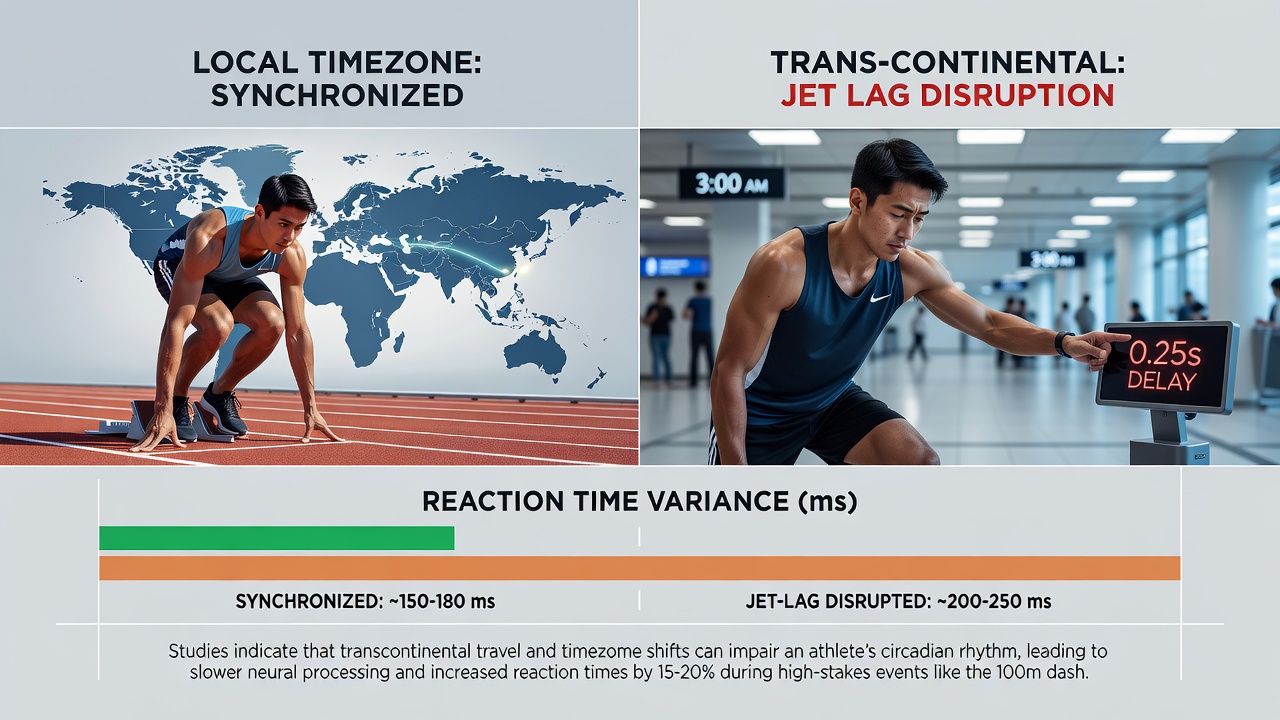
July 2026 brings added attention to these dynamics as the FIFA World Cup expands across venues in North America, requiring squads from South America, Europe, and Asia to manage multiple transcontinental legs within the group stage calendar. Preparation reports already highlight training camps that incorporate simulated time shifts and reaction drills calibrated to expected venue clocks, with several federations citing internal metrics that link earlier arrivals to preserved sprint initiation times and pass completion rates under fatigue.
Recovery Protocols and Measurement Tools
Medical teams now rely on wearable devices that log heart rate variability alongside reaction time apps to quantify adaptation progress. These tools flag when an athlete's response latency remains elevated beyond expected thresholds, prompting adjustments in training load or nap scheduling. Research compiled by the Canadian Sport Institute demonstrates that consistent exposure to natural light at target destination hours accelerates realignment compared with indoor-only regimens, although individual variability tied to chronotype still produces wide ranges in recovery speed across a roster.
Coaches have incorporated reaction-specific drills that replicate match demands rather than relying solely on general fitness work. One documented approach involves progressive exposure to strobe lighting and decision trees that force athletes to process visual cues while fatigued, helping maintain baseline speeds even when circadian misalignment persists. Data collected across multiple seasons shows modest but consistent gains in post-travel testing for squads that integrate these methods versus those that focus only on physical recovery.
Conclusion
Transcontinental competition continues to test how precisely athletes can recalibrate internal clocks under tournament pressure, and ongoing measurement efforts supply clearer pictures of reaction time fluctuations tied to travel direction, arrival timing, and intervention choices. As events like the 2026 World Cup unfold across multiple continents, teams that align preparation with established circadian research stand positioned to reduce the performance gaps that have appeared in earlier cycles.