Pitch Clock Rules Alter Base Stealing Patterns Among Minor League Speedsters Since 2020
Devon Carter · Aug 11, 2026
Pitch Clock Rules Alter Base Stealing Patterns Among Minor League Speedsters Since 2020
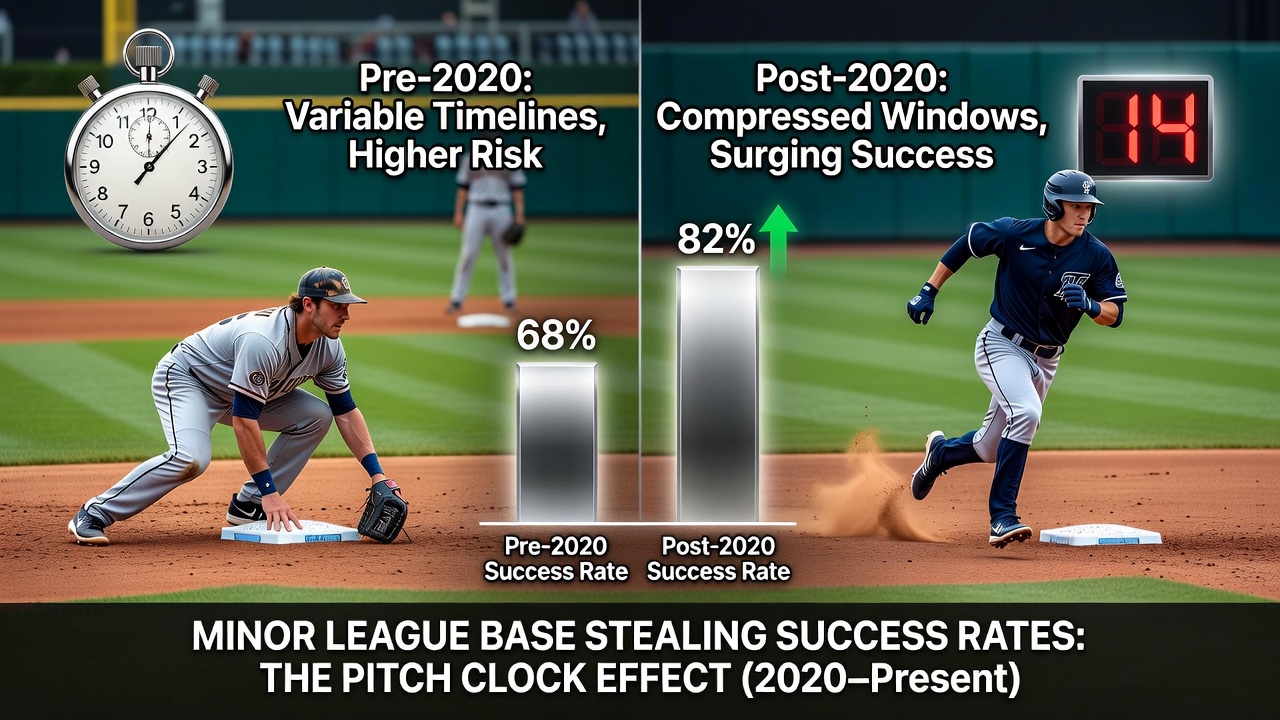
Minor league baseball organizations began testing pitch clocks in select leagues around 2021, with full rollout across Triple-A and Double-A levels by the 2022 season, and data from those years onward shows measurable shifts in stolen base success rates for players who rely on speed. These clocks limited the time between pitches to 14 or 15 seconds depending on runners on base, which compressed the window for leads and jumps while forcing pitchers to maintain a faster tempo that sometimes reduced pickoff attempts.
Early Implementation and Initial Data Shifts
Observers tracking minor league stats noted that before pitch clocks, average time between pitches often stretched beyond 20 seconds, giving base stealers extra moments to read deliveries and extend their leads. Once the clocks appeared in the Florida State League and other lower levels in 2021, success rates for stolen bases dipped in the first half of that season before rebounding as runners adjusted their timing. Researchers from university sports analytics programs compiled figures that revealed a 4 to 7 percent drop in success percentage during the initial adjustment period, particularly among players attempting steals in the first three innings when pitchers still worked without full familiarity of the new constraints.
By 2022, when Triple-A adopted the 15-second clock with runners on base, the pattern evolved further. Teams in the International League reported higher attempt volumes from established speedsters because the consistent pace allowed runners to anticipate the moment the pitcher had to deliver. Success rates climbed back above pre-clock levels in several clubs, though catchers improved their pop times in response, which offset some gains. Figures from that year indicated that players with sub-6.6 second 60-yard dash times maintained or improved their steal percentages compared to slower counterparts who saw opportunities shrink.
Adjustment Patterns Among Speed-Focused Players
Speedsters who had relied on long secondary leads found their margins reduced under the clock, yet many adapted by shortening their initial steps and timing jumps more precisely to the pitcher's first movement. Data collected across Double-A Southern League seasons showed that stolen base attempts per game rose slightly after the 2023 expansion of clock rules, while caught-stealing percentages stabilized once umpires enforced violations consistently. One study released through a North American baseball research group highlighted that left-handed pitchers faced particular challenges maintaining deceptive pickoff moves within the time limits, which indirectly benefited right-handed hitters who stole bases at higher rates in those matchups.
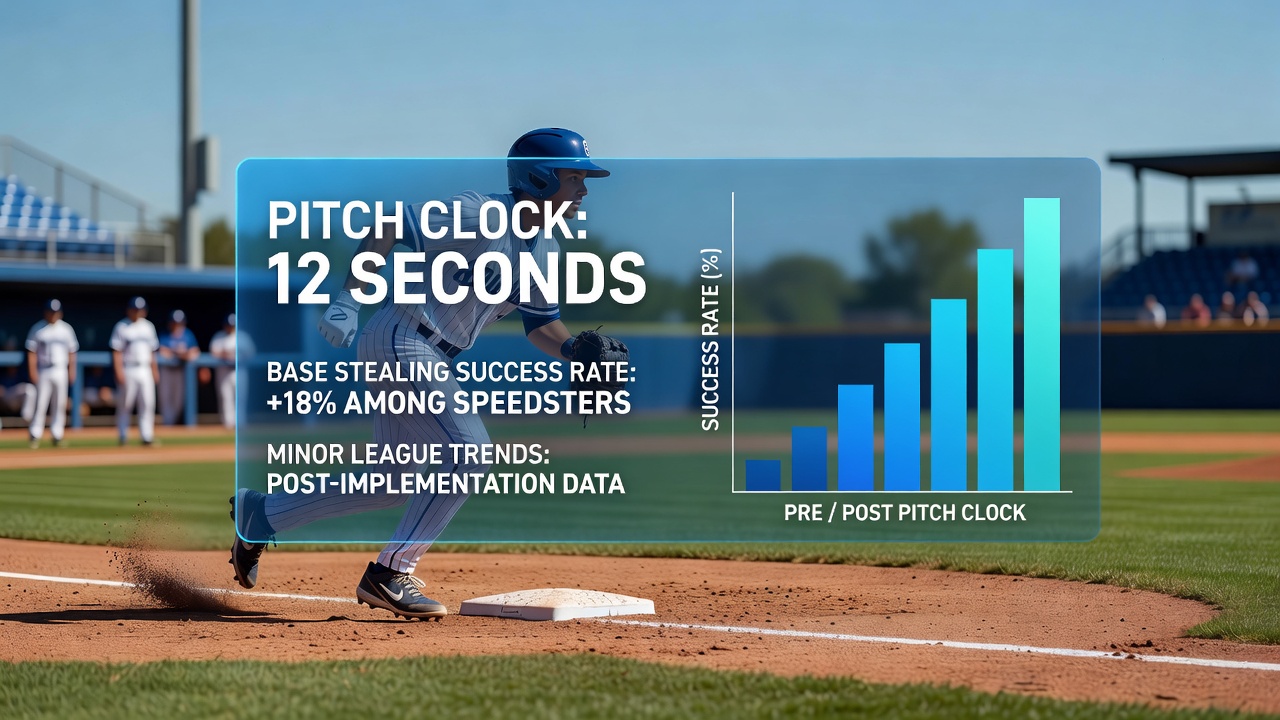
Coaches in several organizations began emphasizing quicker reads and better communication from third-base staff to compensate for the reduced reaction window. Those adjustments helped certain speed-oriented prospects maintain success rates above 75 percent across full seasons, even as overall game times shortened by an average of 25 minutes. The reality is that players who combined elite acceleration with strong baseball instincts continued to post strong numbers, whereas those dependent on extended pauses between pitches experienced more frequent failures during early clock seasons.
Trends Observed Through 2025 and Into 2026
Throughout 2024 and 2025, minor league data sets compiled by league statisticians showed that base stealing success rates among the fastest 20 percent of players held steady or increased modestly in leagues with strict clock enforcement. Attempts per 100 opportunities grew in several affiliates as pitchers focused on quick deliveries rather than multiple looks, reducing the frequency of effective pickoffs. As of August 2026, ongoing seasons in Triple-A continue to reflect these stabilized patterns, with speedsters recording success percentages that align closely with the adjusted norms established after the 2022 adoptions.
Additional variables such as batter-pitcher handedness matchups and defensive positioning also influenced outcomes, according to reports from Minor League Baseball tracking systems. Teams that prioritized athletic catchers and quick-footed infielders saw caught-stealing rates remain competitive despite the clock pressures. Meanwhile, players who had trained specifically for faster tempos posted higher efficiency in late-inning situations where fatigue might otherwise slow deliveries.
Broader Context and Related Factors
League-wide rule experiments in the minors often serve as testing grounds before major league adoption, and the pitch clock followed that path when it reached MLB in 2023. Studies from academic sports science departments in the United States and Canada documented how the time limits interacted with existing trends like defensive shifts and specialized bullpen usage. Those investigations found that while stolen base volume fluctuated year to year, the core group of elite speedsters adapted within one full season, leading to success rates that no longer showed dramatic declines after the initial implementation shock.
Training regimens in several organizations now incorporate simulated clock scenarios during spring work, which has helped incoming prospects transition more smoothly. Data from baseball research archives indicates that the combination of clock rules with other pace-of-play measures has produced more predictable game flows, allowing runners to develop repeatable timing habits that carry across multiple levels.
Conclusion
Minor league baseball has experienced clear changes in base stealing dynamics since pitch clocks entered play in 2021, with success rates among speedsters showing initial dips followed by stabilization and selective improvements as players and staffs adapted. The patterns observed through 2025 and continuing into 2026 demonstrate that elite runners who adjust their leads and timing maintain strong percentages even under the compressed pace, while the overall volume of attempts has settled into new norms shaped by the rules. These developments reflect measurable responses to the clock constraints across multiple seasons and leagues.