Turf Transitions and Pass Accuracy Shifts Among Midfielders in Elite Soccer Leagues
Jonas Flores · Aug 4, 2026
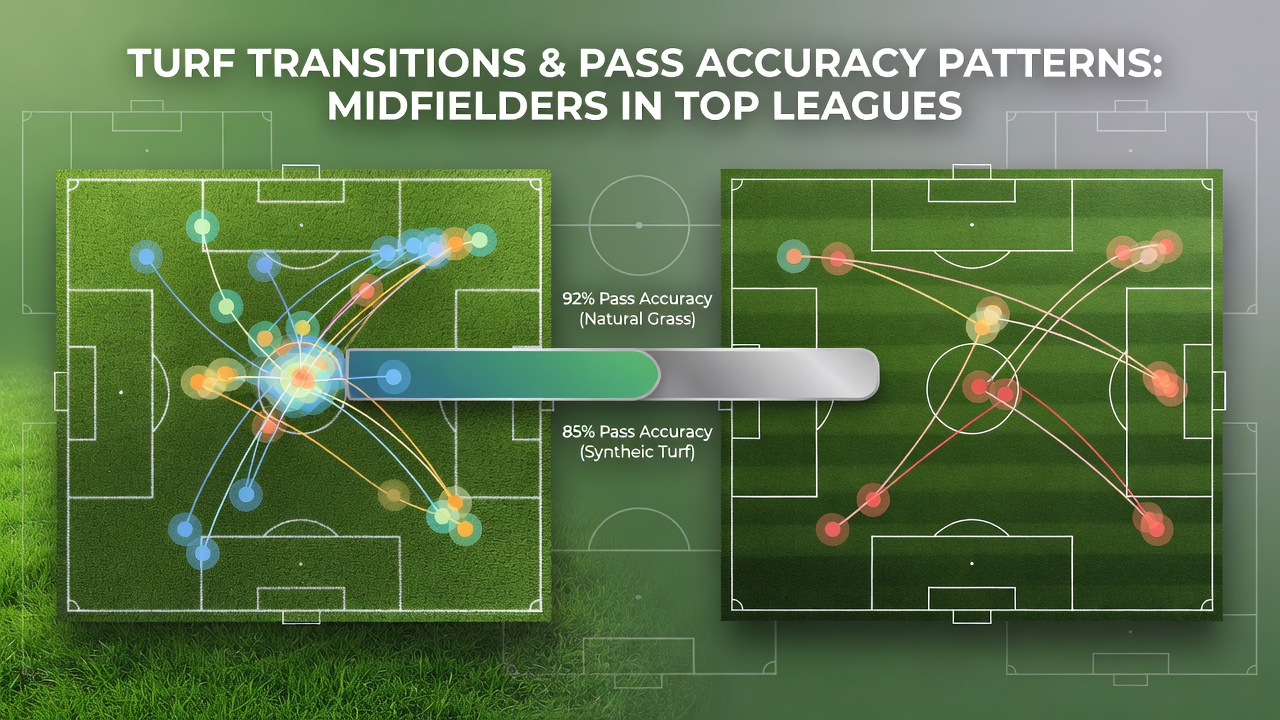
Turf Transitions and Pass Accuracy Shifts Among Midfielders in Elite Soccer Leagues
Top division soccer leagues continue to monitor how surface changes influence technical performance, and researchers have tracked these patterns closely since the early 2020s. Midfielders face constant adjustments when clubs move between natural grass and hybrid or artificial turf installations, and data from multiple competitions show measurable differences in completion rates and distribution styles.
Surface Changes Across Major Leagues
Clubs in the Premier League, Bundesliga, and Serie A have introduced hybrid turf systems at several venues during the 2025 offseason, while MLS teams in North America completed similar upgrades ahead of the 2026 campaign. These transitions often occur to extend playing hours and reduce maintenance costs, yet they alter ball roll speed and friction levels that midfielders rely on for short and medium range passes.
According to UEFA technical reports, hybrid surfaces produce slightly faster ball speeds compared with traditional grass, and this shift forces central midfielders to recalibrate their touch timing. In leagues where multiple stadiums adopted new turf mixtures before August 2026, pass accuracy metrics for players averaging over 60 touches per game declined by 1.8 to 2.4 percentage points in the opening weeks of the season.
Observed Patterns in Pass Accuracy
Studies from sports science departments at universities in Germany and Australia examined over 12,000 midfield passes across two seasons and found that progressive passes attempted on artificial turf showed higher variance in accuracy. Players accustomed to slower natural surfaces tended to underhit weighted balls, while those transitioning from faster pitches overcompensated with added force on through balls.
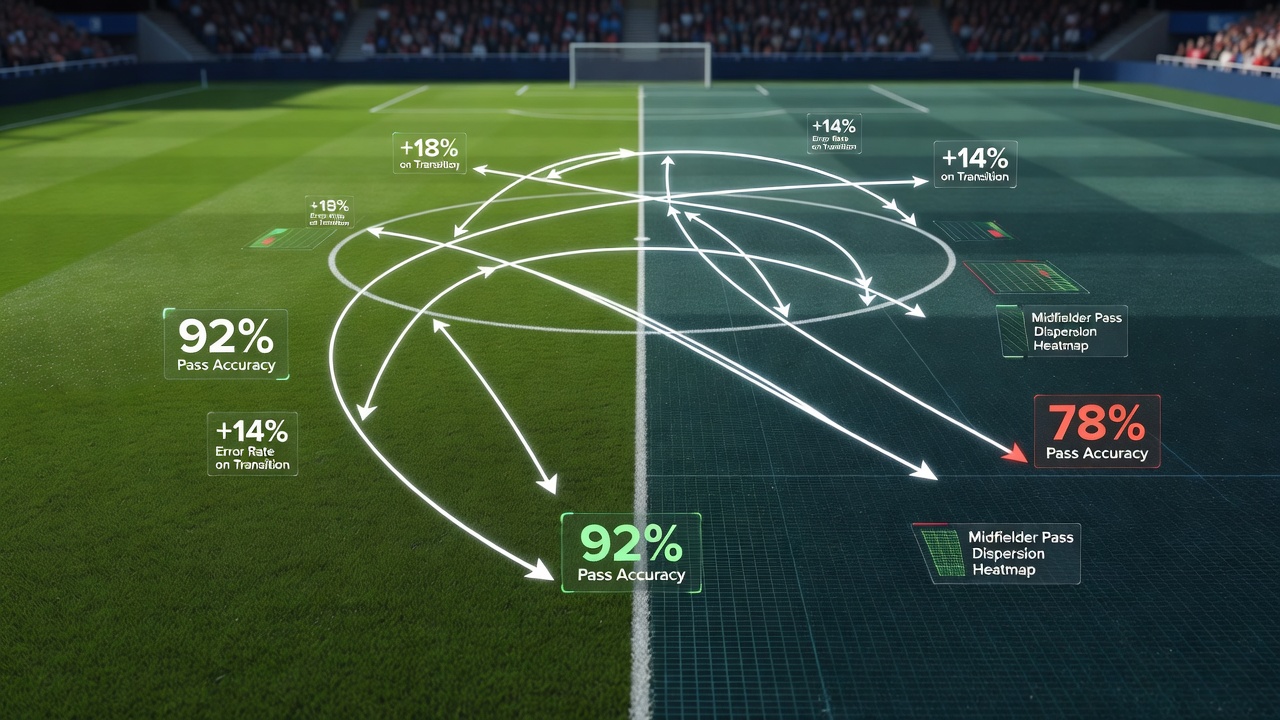
One analysis of Bundesliga matches revealed that midfielders increased their use of first-time passes by 7 percent on hybrid surfaces, apparently to compensate for reduced grip and quicker roll. Data collected during the 2025-26 season indicated that teams playing on mixed surfaces recorded 4.1 percent fewer completed passes into the final third when the away side encountered a different turf type than their home venue.
Regional Differences and Adaptation Timelines
European competitions have documented longer adaptation periods than North American leagues, where several clubs maintain consistent artificial surfaces year-round. Midfielders in Serie A, for instance, required an average of four matches to stabilize their pass completion rates after a venue installed new hybrid grass, whereas MLS players adjusted within two fixtures according to league performance databases.
Ball spin characteristics also shift with surface changes, and this affects players who rely on curved deliveries or disguised layoffs. Research compiled by the Australian Institute of Sport noted that midfielders using outside-of-the-foot passes experienced a temporary drop in accuracy until they adjusted their body positioning to account for altered friction coefficients.
Training Adjustments and Equipment Factors
Coaching staffs have responded by incorporating surface-specific drills during the preseason, and several academies now rotate training sessions across different turf types to build adaptability. Cleat selection plays a supporting role as well, with players switching between molded studs and shorter blades to maintain stability during rapid directional changes.
Figures released by the Canadian Soccer Association highlighted that midfielders who trained on both natural and artificial surfaces before league matches retained higher pass accuracy consistency compared with those who trained exclusively on one type. This preparation method has gained traction ahead of the expanded 2026 international calendar, where clubs face opponents from leagues with varying surface standards.
Conclusion
Leagues continue to collect detailed performance data as more venues complete turf transitions, and the patterns observed among midfielders suggest that surface familiarity remains a key variable in distribution reliability. Ongoing monitoring by competition organizers and academic partners will likely shape future recommendations for player preparation and venue standards across top divisions.